Blog
Track Lighting on Suspended Ceilings. The Complete USA Guide for Commercial and Residential Spaces
Track lighting integrated into suspended ceilings for clean, flexible illumination in commercial interiors
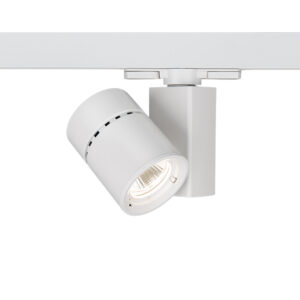 Exterminator II 1023 W Track Luminaire
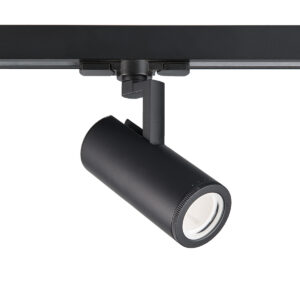 Paloma 4023 22W W Track Luminaire
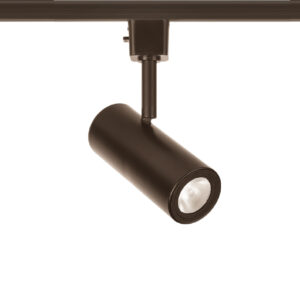 Silo X10 10W H/J/L Track Luminaire
Suspended ceilings are one of the most widely used ceiling systems in the United States. They are common in apartments, condos, retail stores, offices, galleries, showrooms, restaurants, hospitality and educational buildings. A suspended ceiling creates a clean finish, hides mechanical services and ducting, improves acoustics and allows for easy access when maintenance is required. For lighting designers, the suspended ceiling is also one of the most flexible surfaces to work with because it accepts both surface mounted and suspended linear track lighting.
Many people assume that suspended ceilings limit their lighting options or force them to use basic fixtures. In reality, suspended ceilings open up a wide range of design possibilities, especially when using track lighting. Track systems allow precise beam control, adjustable positioning and the option to change lenses at any time. This is why track lighting is now used far more often than recessed downlights in commercial and gallery environments.
This article provides a complete guide to installing track lighting on suspended ceilings in the USA. It explains the types of suspended ceilings, how the track mounts securely, what wattages and beam angles work best, how 5 CCT selection enhances lighting control and the exact system specifications that suit retail and gallery applications.
Understanding Suspended Ceilings in the USA
Adjustable track system mounted on a suspended ceiling delivering precise beam control
A suspended ceiling is an independent ceiling structure installed below the true structural ceiling. It creates a cavity or plenum space for electrical wiring, ducting, plumbing, fire systems and air conditioning. There are several types, each with its own structural characteristics.
1. Drop Ceiling (Grid Tile Ceiling)
The drop ceiling is the most common suspended ceiling in North America. It uses a visible T-bar metal grid system designed to hold acoustic tiles, mineral fiber panels or lightweight decorative panels.
You will find this ceiling type in:
• Retail stores
• Office buildings
• Schools and universities
• Medical clinics
• Supermarkets
• Call centers
• Commercial fitouts
Although the T-bar grid looks strong, it is designed only to hold lightweight tiles and is not a structural load-bearing system. This means track lighting cannot be screwed directly into the grid. The track must instead mount to the true ceiling above the grid.
2. Suspended Hard Lid Ceiling (Plasterboard or Sheetrock)
This looks like a normal plaster or drywall ceiling but is installed on a suspended metal framing system several inches or feet below the structural ceiling. It creates a clean architectural finish while still providing the benefits of a suspended void.
This ceiling type is found in:
• High-end retail interiors
• Galleries and museums
• Apartments
• Residential basements
• Hotel rooms
• Restaurants
Hard lid ceilings can easily support track lighting because the metal studs or timber framing behind the plaster provide mounting points. The track screws directly into the framing.
3. Floating Island Suspended Ceilings
These are decorative floating panels used to define zones, improve acoustics or create design interest. They do not cover the entire ceiling. Track lighting can be integrated around or through the floating island, depending on the structure.
Common in:
• Open plan offices
• Restaurants and bars
• Modern retail interiors
• Creative studios
These ceilings require thoughtful planning because the floating section may or may not support lighting weight. In this case, the track is usually suspended independently and aligned visually with the panel.
4. Acoustic Suspended Ceilings
Acoustic panels are designed to absorb sound. These ceilings use dense mineral fiber or felt tiles. Track lighting is usually mounted via suspension rods that pass through the panel so the acoustic tile does not carry weight.
5. Fire-Rated Suspended Ceilings
Some commercial buildings use suspended ceilings with fire-rated tiles. Lighting installation here must comply with fire regulations. Track lighting is still possible but must use approved mounting methods that maintain the integrity of the barrier.
Trusted by Clients Across Different Spaces and Industries
How Track Lighting Attaches to a Suspended Ceiling?
Modern suspended ceiling installation combining accessibility with high-performance track lighting
The installation method depends on the type of ceiling. Here are the exact approaches used across the USA.
Drop Ceiling Track Installation
The key point is that the track never attaches to the T-bar grid.
The correct method is:
• The electrician locates the structural concrete slab or joists above the tiles.
• Threaded rods, suspension cables or metal brackets are fixed to the structure.
• These rods drop down into the plenum space.
• The track is attached to the rods at the tile level or slightly below.
• Wiring is run in the plenum space and accessed through a tile entry.
This creates a stable, long-lasting installation and allows the tiles to remain removable.
Hard Lid Suspended Ceiling Installation
Track lighting attaches directly to the framing.
Steps include:
• Locating the metal channels or timber battens behind the drywall.
• Screwing the track into these members.
• Running conduit or flexible cable inside the cavity.
• Using a shallow track profile for a clean architectural effect.
This provides the cleanest aesthetic because the track appears completely integrated.
Floating Island Installation
The track can be:
• Suspended on cables from the structural ceiling above
• Attached to reinforced parts of the floating structure
• Mounted slightly below the floating panel for a layered lighting effect
This is often used in designer restaurants and hospitality spaces where lighting becomes part of the visual feature.
Why Track Lighting Is Ideal for Suspended Ceilings?
Track lighting on suspended ceilings allowing easy repositioning and lens changes for evolving residential interiors
Many suspended ceilings are between eight and ten feet high, which can make fixed downlights feel flat or dull. Track lighting offers major advantages:
1. Directional Light Placement
Track heads can aim light exactly where needed, overcoming the flat plane of a suspended ceiling.
2. High Output for High Ceilings
The 30W USA-standard track head delivers strong brightness suitable for retail, galleries and high ceilings.
3. Interchangeable Beam Angles
Suspended ceilings often sit at distances that require different beam spreads. A 15 degree reflector provides strong focus while a 60 degree reflector produces an even, wide wash.
4. Easy Reconfiguration
Retail displays, artwork and product layouts change frequently. Track lighting makes this simple.
5. Reduces Glare
Suspended ceilings can cause glare from poorly positioned downlights. Track lighting avoids this by aiming beams precisely.
6. Clean, Modern Aesthetic
Track lighting adds architectural clarity to an otherwise flat ceiling plane.
Choosing the Right Track Light for Suspended Ceilings
Track lighting installed on suspended ceilings creating a clean, modern look for residential interiors
The best specification for USA commercial and gallery use is:
30W Power Level
This wattage provides a strong output without excessive heat or energy consumption. It suits:
• Retail stores
• Art galleries
• Supermarkets
• Salons
• Clothing stores
• Product displays
• Commercial offices
5 CCT Switch Options
On the back of the fitting, you can select:
- 2700K
- 3000K
- 3500K
- 4000K
- 5000K
This allows for:
• Warm lighting in residential or hospitality settings
• Neutral lighting in offices
• Bright white lighting for retail and detailed work
• Gallery lighting tuned to specific artwork colors
Interchangeable 15 Degree and 60 Degree Reflector Lenses
This system is essential for suspended ceiling environments.
A 15 degree lens is ideal for:
• Artwork lighting
• Product spotlighting
• Accent features
• Distance lighting when the track is high
A 60 degree lens is used for:
• General lighting
• Wall washing
• Merchandising
• Ambient retail lighting
The ability to swap lenses without replacing the fixture lowers long-term costs and increases flexibility.
Track Mounting Options for Suspended Ceilings
Professional track lighting installation showcasing flexibility and performance on suspended ceiling systems
Surface Mounted Track
The track attaches directly to the ceiling plane, suitable for hard lid suspended ceilings and some reinforced floating panels.
Suspended Track
Cables drop the track below the suspended ceiling level. This is ideal when:
• The ceiling is very high
• You want a modern industrial aesthetic
• You need stronger light penetration to the floor or display areas
Suspended track is especially popular in retail and gallery settings.
Recessed Track (in hard lid only)
In a hard lid suspended ceiling, the track can be recessed into a custom channel for a minimal flush finish.
Common Use Cases in the USA
Suspended ceiling track lighting enhancing retail and gallery presentation with controlled illumination
Retail Stores
Suspended ceilings and track lighting are the most common combination in retail design. Track heads with a mix of 15 degree and 60 degree beams allow product displays to be shaped with light.
Galleries and Art Spaces
Track lighting is the industry standard. The flexibility of changing beam angles is essential for rotating exhibitions.
Offices
Suspended ceilings in office environments benefit from track lighting when a more modern and directional lighting system is desired.
Residential Basements and Lofts
Track lighting can bring strong architectural presence to a space with a suspended ceiling.
FAQs
1. Can track lighting attach directly to a suspended ceiling grid?
No. The grid is not designed to support weight. Track must attach to the structural ceiling above.
2. What wattage is best for suspended ceilings?
A 30W track head is the standard for retail, galleries and commercial projects in the USA.
3. Why is 5 CCT important?
It allows the same light fitting to be used across multiple spaces while matching the needed color temperature.
4. Can I change the beam angle of the light later?
Yes. The reflector lenses are interchangeable. Use 15 degree for focus and 60 degree for wide wash.
5. Is track lighting good for low suspended ceilings?
Yes. It brings directionality and avoids flat lighting caused by low ceiling heights.
6. Can I recess track into a suspended ceiling?
Only in a hard lid suspended ceiling with proper framing.
7. Can track be suspended lower than the ceiling?
Yes. Cable suspension kits are common and useful for higher ceilings.
8. Does track lighting work with acoustic suspended ceilings?
Yes. Mounting must pierce or bypass the panel without allowing the panel to carry the load.
9. Do suspended ceilings limit light output?
No. With 30W track heads and proper beam angles, you can achieve strong lighting performance in any suspended system.